
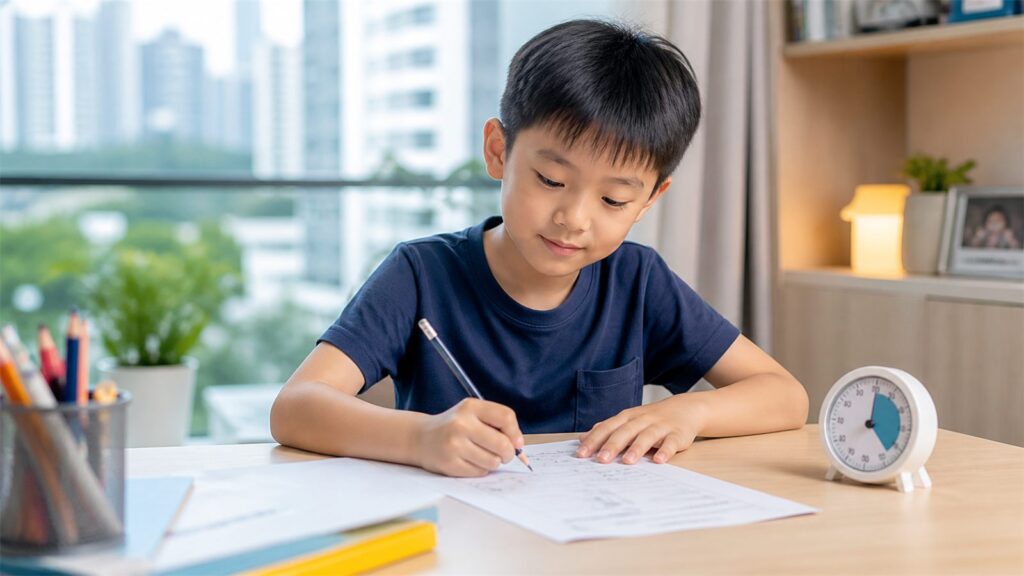
A child should start timed practice after understanding most of the tested content and completing similar questions accurately without heavy help. Begin by timing one section, not the whole paper. Full-paper timing is the final rehearsal stage, not the first way to learn a topic.
Key takeaways
- Accuracy and method come before speed.
- Start with gentle section timing.
- Use full-paper timing to practise pacing and stamina.
- Review where time was lost instead of focusing only on the final score.
What are the three practice stages?
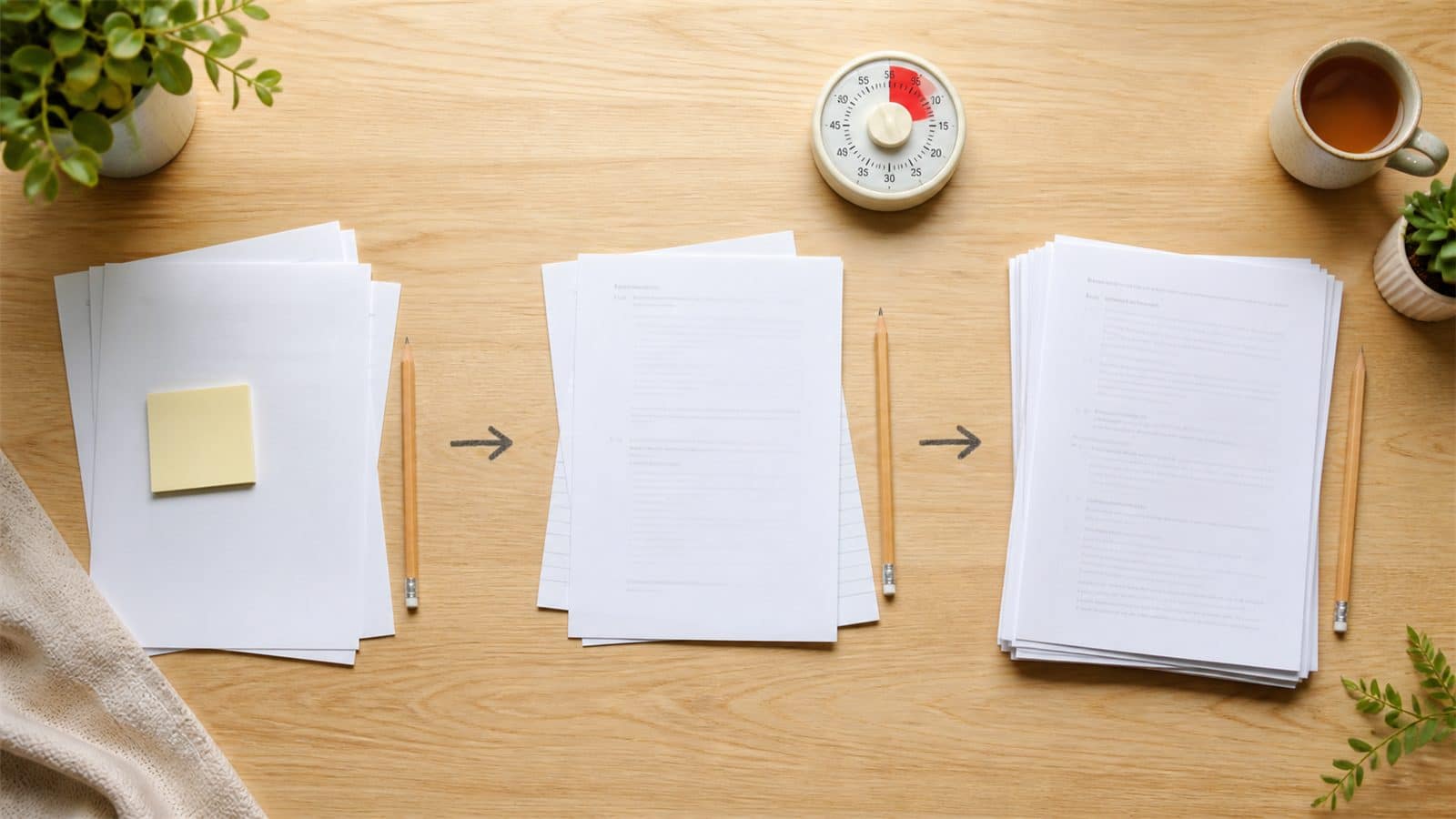
Timed practice works best as a progression from learning to rehearsal. Moving too early can make a child rush methods they do not yet understand.
| Stage | Conditions | Main purpose |
|---|---|---|
| Learning | Untimed, open-book if useful | Understand methods and instructions |
| Building | Selected sections with flexible timing | Improve independence and pacing |
| Rehearsal | Full official duration and conditions | Test stamina, decisions and checking |
How do you know a child is ready?
The child is ready for section timing when they can explain the method, complete similar questions independently and maintain reasonable accuracy. The child is ready for full-paper timing when content gaps are no longer dominating the result.
Watch for these signs:
- The child knows how to begin most questions.
- Mistakes are increasingly about pacing or checking.
- A section can be completed without repeated adult prompts.
- Marking produces a manageable correction list.
How should the first timed session work?
Choose a familiar paper section and explain that the timer is collecting information, not judging the child. Record the completion time, accuracy and where the child paused. Do not interrupt unless the agreed rules allow help.
Afterwards, ask three questions: Where did time disappear? Which questions should have been skipped and revisited? What checking routine would have caught an error?
What if timing makes the child anxious?
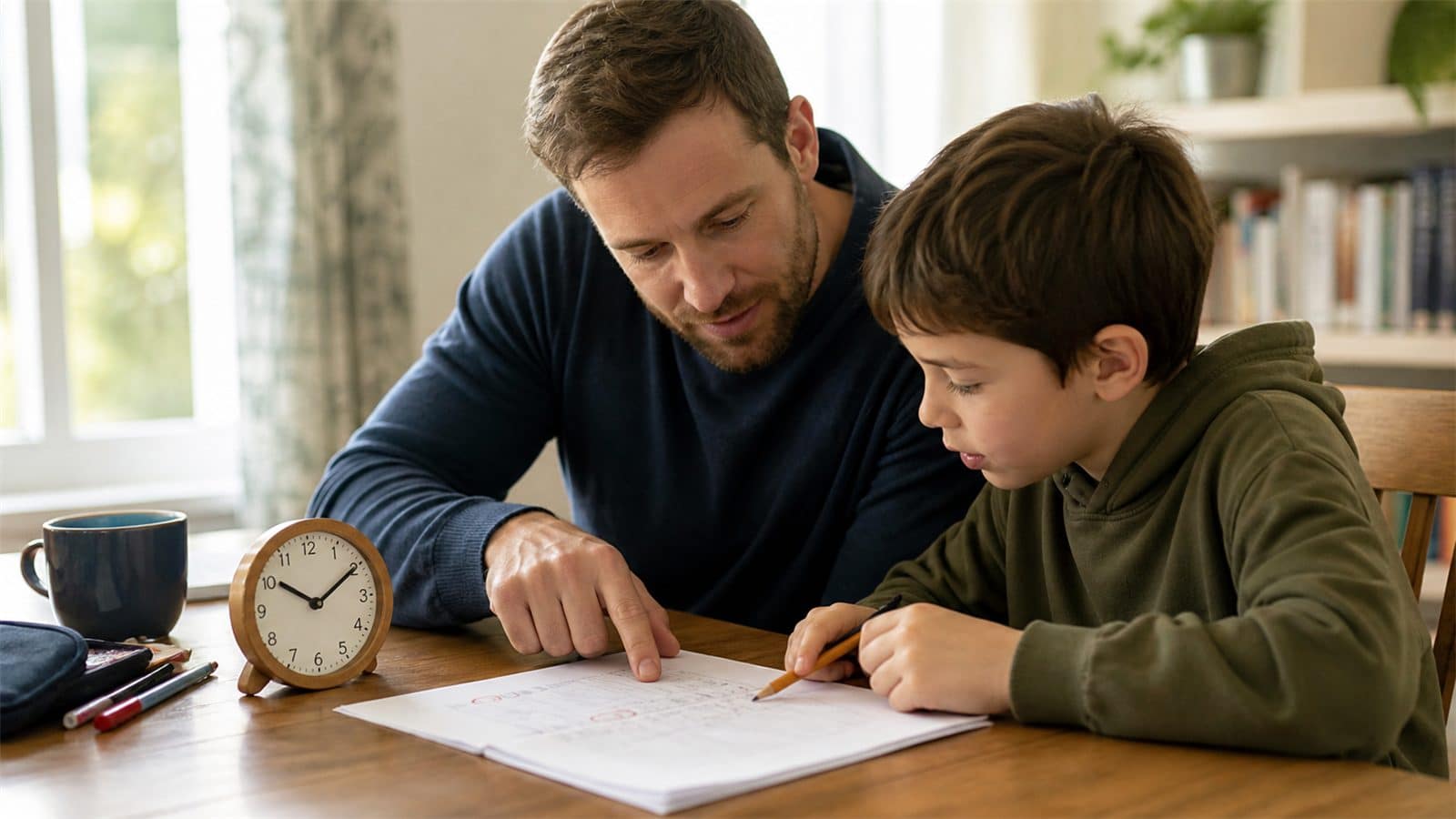
Return to shorter sections and make the goal predictable. Use a visible timer only if it helps. Some children work better with a halfway reminder. Keep the first sessions private and low-stakes, and do not compare siblings or classmates.
How often should full papers be timed?
Use full timed papers often enough to learn pacing, but not so often that corrections disappear. One carefully reviewed rehearsal can be more valuable than several consecutive papers. Schedule a lighter day after a demanding full paper.
Open Paper’s paper sets with answer keys support the full attempt-mark-correct loop. Primary 6 families can use recent prelim papers and the PSLE countdown plan.
Frequently asked questions
Should Primary 3 pupils do timed papers?
They can practise short timed sections when the school format makes timing relevant, but understanding and confidence remain more important than full-paper speed.
Should the timer stop for breaks?
During learning, flexible breaks are fine. During a full rehearsal, follow the paper’s official duration and conditions as closely as practical.
What if my child cannot finish?
Identify why. The cause may be weak content, slow reading, spending too long on one question or an ineffective checking routine. Practise that cause directly.
Does a faster time mean better preparation?
No. Faster work helps only when accuracy and reasoning remain sound. The goal is controlled pacing with enough time to check.
Sources
- SEAB 2026 PSLE Examination Timetable, accessed 7 August 2026
- SEAB PSLE formats examined in 2026, accessed 7 August 2026
Next step
Choose one familiar section, agree on the timing rules and treat the result as information. Fix the biggest pacing problem before attempting a full timed paper.