
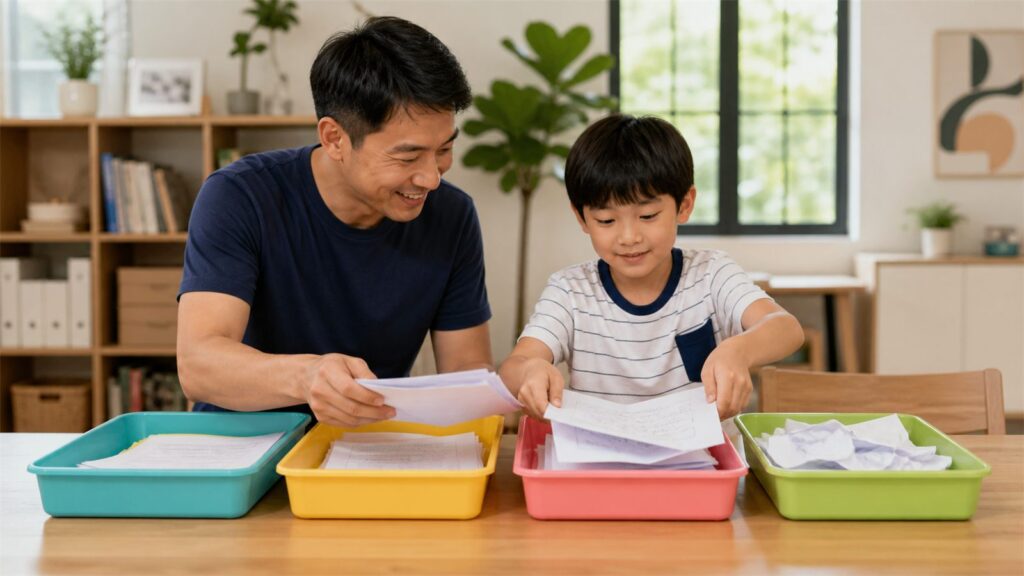
Used school papers can still support learning after the examination. Review important mistakes, keep a small set of useful examples, remove personal information and share eligible papers through a responsible exchange. Recycle duplicates or damaged copies that no longer have learning value.
Key takeaways
- Review the paper before filing or removing it.
- Keep correction value, not every sheet.
- Remove names, classes, marks and other personal details before sharing.
- Do not assume that every paper can be copied or redistributed.
What should parents review first?
Review the paper while the child’s thinking is still fresh. Choose errors that reveal a concept gap, misunderstood instruction, careless habit or time-management issue. Avoid reopening every mark as a judgement on the child.
Create a compact correction record:
| Keep | Record |
|---|---|
| One representative error | Why it happened |
| Correct working or answer | What to do next time |
| Teacher feedback | Date to retry |
Once the learning has been captured, many loose sheets no longer need permanent storage.
Which papers should families keep?
Keep papers that show useful teacher feedback, recurring mistakes, a format the child will meet again or strong progress worth revisiting. Store them by level, subject and assessment type. A slim organised file is more useful than an unlabelled box.
Photograph a correction page only if you can store it securely and remove it when no longer needed. Avoid uploading children’s names, classes or marks to shared groups.
How should personal information be removed?
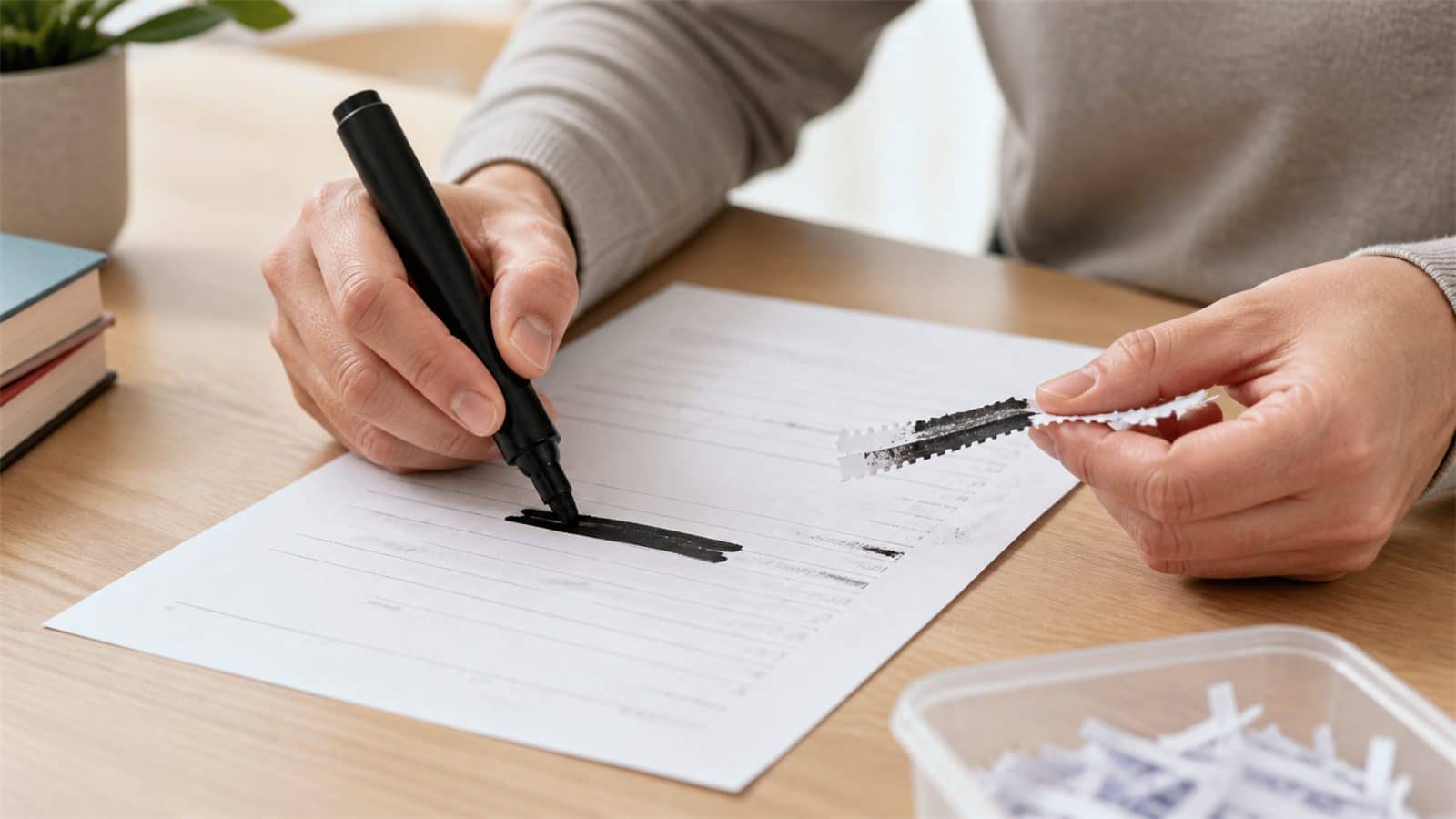
Personal data should be removed before a paper leaves the household. Cut off or cover the name, class, index number, marks, teacher comments that identify the child and any QR or tracking label. Check every page, including cover sheets and answer booklets.
If the information cannot be removed cleanly, do not share that copy.
Can school papers be exchanged?
Some parents share original physical papers so other families can learn from them and so useful materials avoid waste. However, school papers involve intellectual-property and privacy considerations. Do not claim school or MOE endorsement, reproduce papers publicly or assume that every paper is eligible for redistribution.
Open Paper’s Share Your Papers page provides the current submission route. Open Paper reviews submissions and may reject papers that are incomplete, unsuitable or raise concerns. Parents should keep a copy only when they are permitted to do so and should ask if uncertain.

What should be recycled?
Recycle duplicate, damaged, obsolete or low-value copies after removing personal information. Separate plastic covers, metal clips or other non-paper components according to local recycling requirements. Do not place confidential pages into a public recycling bin without obscuring the personal data.
A 15-minute post-exam reset
- Ask the child to choose the three most useful corrections.
- Record the causes and correct methods.
- File only the pages worth revisiting.
- Remove personal information from possible exchange papers.
- Recycle the remainder responsibly.
For the next assessment, use our guide to WA, SA and prelim labels and how many past-year papers to complete.
Frequently asked questions
Should parents keep every school paper?
No. Keep papers with useful corrections, representative errors, relevant formats or important teacher feedback. Organised examples are more useful than a large unsorted pile.
Can I post a school paper in a parent chat group?
Do not assume you have permission to reproduce or distribute it. Remove personal information and consider the school’s and paper creator’s rights before sharing.
What information should I remove?
Remove the child’s name, class, index number, marks, identifying teacher comments, barcodes, QR codes and any other personal or tracking details.
Can I submit incomplete papers to Open Paper?
Use the current submission form to describe what you have. Acceptance depends on completeness, condition, relevance and review. Do not promise yourself a reward until the submission is confirmed.
Sources
- Open Paper Share Your Papers, accessed 7 August 2026
- Singapore PDPC data protection guidance, accessed 7 August 2026
Next step
Complete the learning review first. Then keep, exchange or recycle each paper deliberately, with personal information and ownership concerns handled carefully.